A Nursery and Garden Supplies Business...
Shop 7, 108 Dover Drive, Burleigh Heads - QLD 4220, AUST - Phone 0490 503 674 - Office hours 9-3pm Mon-Fri

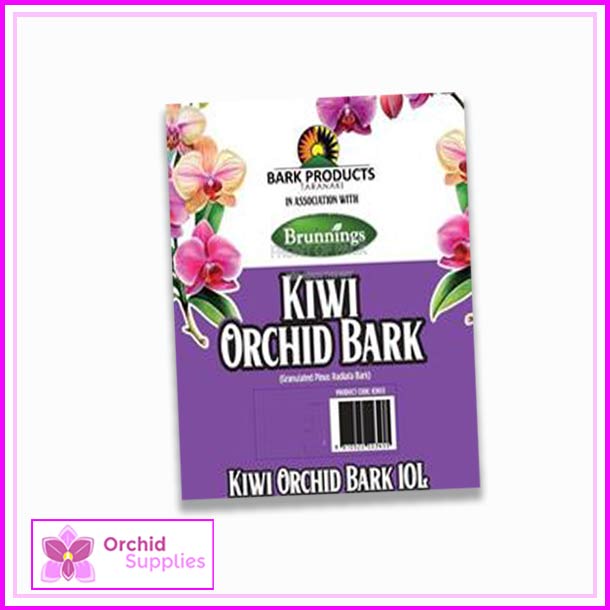
KIWI Premium Grade #3 Orchid Bark 10 Litre
FREE Shipping

Secure Online Payments

Un-Aged / Uncomposted
Kiwi Bark - PRODUCT OF NEW ZEALAND
Kiwi Orchid Bark is a premium, sustainable orchid growing media made in Aotearoa New Zealand and used worldwide to grow superior orchids. With a particle size of around 8–20 mm, Grade #3 is ideal for small to medium orchids such as Cymbidiums, Cattleyas, Vandas, and Phalaenopsis. ⚠️ TASMANIA – *Important Note: Due to quarantine restrictions, bark products cannot be shipped to Tasmania.
FREE SHIPPING!
All prices include shipping.
Price range: $44.99 through $86.99
Orders sent ‘WITH TRACKING’ are delivered faster, usually within 2–6 business days, depending on your location.
If your order is urgent, we recommend choosing a pack size that offers ‘EXPRESS POST’ where available.
CLICK ON THE DROPDOWN MENU BELOW TO VIEW PACK SIZES AND PRICES:
Send us a message to check stock if ‘Out of stock’ message appears.
KIWI Premium Grade #3 Orchid Bark 10 Litre
Kiwi Orchid Bark – Grade #3 (8–20 mm)
Premium Sustainable Orchid Growing Media – Made in Aotearoa New Zealand
Average particle size: 8–20 mm
Kiwi Orchid Bark is a premium, sustainably sourced orchid growing medium trusted by growers worldwide for producing superior plants. Harvested from responsibly managed plantations in Aotearoa New Zealand, it is made from raw (un-aged) Pinus radiata bark, ensuring exceptional quality, stability, and performance.
🌿 Why Kiwi Orchid Bark Is Different
Unlike aged bark products, Kiwi Orchid Bark is processed immediately after harvesting. The bark is cleaned, screened, and packaged straight after felling, preserving its natural hardness and freshness. With no added fertilisers, it provides a clean, stable growing environment ideal for orchids.
🌱 Why Orchids Thrive in Kiwi Orchid Bark
Orchids are highly sensitive to changes in root-zone conditions. Kiwi Orchid Bark provides a stable, long-lasting medium that supports consistent root health:
-
Naturally stable pH for long-term root stability
-
Hard bark structure that resists breakdown
-
Long-lasting media that reduces repotting frequency
-
Minimal pH fluctuation during repotting, helping prevent root shock
The result is a reliable, natural growing medium that supports strong, healthy, resilient orchids.
🪴 Grade Guide – Choosing the Right Size
No.1 – 3–6 mm
Ideal for seedlings and young orchids straight from the flask. Can be blended with No.2 bark as plants mature.
No.2 – 6–10 mm
Perfect for Disa, Masdevallias, young Cymbidiums, and many other orchid types. Popular for deflasking and seedling stages and can also be used as a Sphagnum moss alternative.
No.3 – 8–20 mm (This Product)
Most popular grade worldwide. Ideal for small to medium orchids such as Cymbidiums, Cattleyas, Vandas, and Phalaenopsis.
No.4 – 20–25 mm
Best suited for larger Cymbidium and Cattleya-type orchids.
No.5 – 25–50 mm
Largest grade. Often used where plants benefit from drying between watering (e.g. Cattleyas), or as a drainage layer at the bottom of pots.
🌍 Kiwi Orchid Bark vs Other Media
Aged bark breaks down faster, causing pH fluctuations that can stress orchid roots and increase repotting frequency.
Fir bark media can also degrade and change pH over time, leading to unstable root environments.
Kiwi Orchid Bark’s raw, un-aged structure stays stable longer, maintaining consistent growing conditions and reducing maintenance.
Sphagnum moss harvesting can impact fragile wetland ecosystems and is often costly. Kiwi Orchid Bark is produced from a renewable plantation by-product, offering a lower environmental footprint and better value.
🧴 How to Use
Kiwi Orchid Bark can be used straight from the bag or blended with other substrates.
Potting Instructions
-
Pre-soak bark overnight to improve water absorption.
-
Remove old media from roots.
-
Add a base layer of bark to the pot.
-
Position plant and fill around roots evenly.
-
Lightly firm the bark.
-
Water and fertilise as required.
Most growers use it undiluted, though additives such as perlite or sphagnum may be used depending on growing conditions.
⏳ Repotting Interval
Thanks to the hardness and stability of raw bark, repotting is generally only required every 3+ years, reducing labour and plant stress.
🌏 Taranaki Bark – Product of New Zealand
No rinsing required apart from flushing small fines created during freight handling.
⚠️ Important Note
This product is made from organic materials and contains naturally occurring micro-organisms such as bacteria, fungi, and protozoa. It may also contain mineral and fertiliser additives.
Avoid breathing dust and avoid direct skin contact. Refer to packaging for full safety and handling instructions.

About Us
Contact Info
Matt or James: 0490 503 674
Shop 7, 109 Dover Drive, Burleigh Heads - QLD 4220, AUSTRALIA
Navigation
Product Categories
Orchid Growing Supplies
© 2026. Orchid Supplies Australia.  Website by Gold Coast Web Design
Website by Gold Coast Web Design